



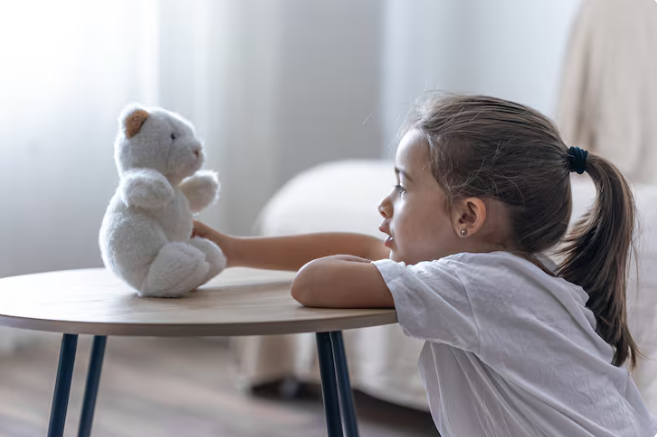
Picture a child stamping their feet in the middle of a supermarket. To an onlooker it might look like bad behaviour. More often, it is a child with a big feeling and no words to explain it. Learning to name feelings is one of the quiet skills that shapes how children cope, connect and grow, yet it rarely gets the attention it deserves.
What does “naming feelings” actually mean?
Naming feelings, sometimes called emotional literacy, is the ability to recognise an emotion and put a word to it. It sounds simple. For a young child, it is anything but. A toddler feeling jealous, tired and hungry all at once experiences one big wave of discomfort. Being able to separate that wave into “I feel left out” or “I am really tired” takes time and practice.
Adults do this almost automatically. Children need help to build the vocabulary first, then the habit of using it.
Why the words matter more than we think
There is good reason to slow down and pay attention here. When a child can label what they feel, something shifts. Research in child development suggests that putting a name to an emotion helps calm the intensity of it. The feeling becomes something to look at, rather than something that takes over.
The benefits stretch further than a calmer afternoon:
– Children who can name emotions tend to manage frustration more easily.
– They find it simpler to ask for help when they need it.
– Friendships often improve, because they can read their own feelings and, in time, the feelings of others.
None of this happens overnight. It grows through everyday moments, repeated often.
How space makes the difference
The word “space” is doing a lot of work in that title, and it matters. Children rarely name feelings on demand. They do it when they feel safe, unhurried and unjudged.
That space can be physical, such as a quiet corner to retreat to. It can also be emotional: an adult who listens without rushing to fix things. When a child says “I feel sad” and the response is a calm “tell me more” rather than “don’t be silly”, they learn that feelings are allowed. That single lesson lays the groundwork for years of healthy expression.
Schools have a real part to play here too. The best learning environments treat emotional wellbeing as part of a child’s education rather than an afterthought. Families [looking at schools that take pastoral care seriously|https://rgsg.co.uk] often notice how much this shapes a child’s confidence, both in the classroom and beyond.
Simple ways to encourage it at home
Supporting a child does not require special training or expensive resources. A few gentle habits go a long way.
Model it yourself. Saying “I feel a bit frustrated, so I am going to take a breath” shows children that adults have feelings too, and that there are ways to handle them.
Offer words, not corrections. If a child is upset, try “you seem disappointed” rather than “stop crying”. You are handing them the vocabulary they lack.
Read stories together. Books are full of characters wrestling with big emotions, which makes them a natural, pressure-free way to talk about feelings.
Keep the door open. Not every child will talk when asked directly. Some open up during a walk or at bedtime. The point is to be available when the moment comes.
A skill for life, not just childhood
Naming feelings is often treated as a small thing, something children will grow out of needing. In truth, it is a skill that serves people for the rest of their lives. Adults who can recognise and express what they feel tend to build stronger relationships and cope better under pressure.
Giving children the space to name their feelings today is one of the most useful gifts we can offer. It costs nothing but patience, and the returns last a lifetime.
*This article was contributed by the team at RGS Guildford, an independent school with a long tradition of nurturing curious, confident and well-rounded young people. RGS Guildford places emotional wellbeing alongside academic ambition, believing the two go hand in hand. To learn more about its approach to pastoral care and education, visit https://rgsg.co.uk.*
Read more: Helpful Tips for Navigating Education and Career with Dyslexia / Jewelry Essentials: A Woman’s Guide to Jewelry Trends
 Save as PDF